Gridfinity generator
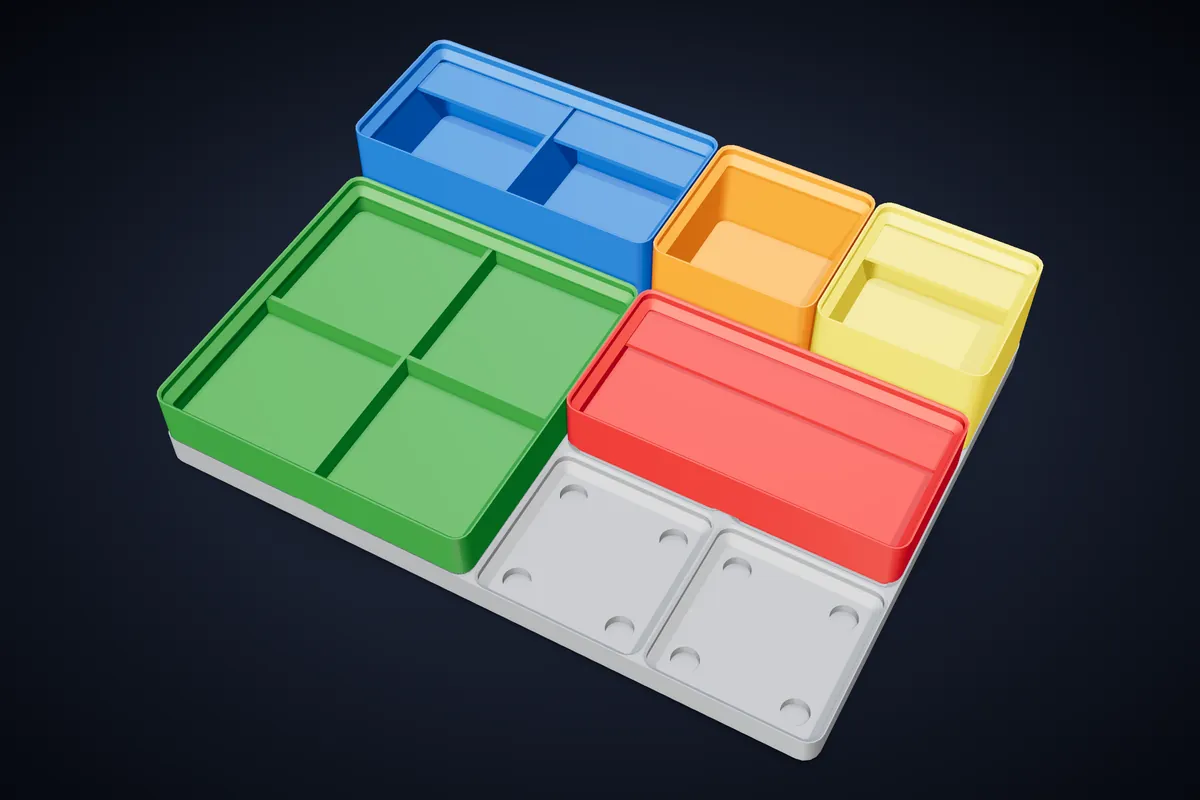
Bins and baseplates on the standard 42 mm grid, sized to your drawer instead of the nearest download. Choose the cells, the height and the extras, and the model is rebuilt in the browser as you go.
Pick a size to start:
Just one project? A 7-day Pro pass is €4.99, no subscription.
How it works
- 1
Bin or baseplate
Pick what you are making. Baseplates hold the grid in the drawer; bins sit in any baseplate that follows the standard, including ones you already printed from elsewhere.
- 2
Set the size in cells
From 1 × 1 up to 6 × 6 cells of 42 mm. Bin height is counted in the usual 7 mm units, from 2 up to 20.
- 3
Add what the bin needs
A stacking lip so bins stack, a label tab, up to 6 × 6 compartments, and magnet pockets or screw holes underneath. Baseplates get the same magnet and screw options.
- 4
Download
STL for one bin, or 3MF to keep several parts separate. The print check runs first, so what you slice is watertight.
Built to the Gridfinity standard
Gridfinity is Zack Freedman's open system for modular storage: a baseplate with a 42 mm grid and bins that drop into it in any combination. Because the dimensions are shared, bins from different makers mix in the same drawer.
The generator follows those numbers — the 42 mm cell, the 7 mm height unit, the stacking lip profile — so a bin made here sits in a baseplate you printed from someone else's file, and the other way round.
- Cells
- 1 to 6 in each direction, for bins and baseplates alike.
- Height
- 2 to 20 units of 7 mm, plus the lip if you keep it.
- Compartments
- Up to 6 rows and 6 columns of dividers inside one bin.
- Label tab
- An angled shelf along the back wall for a printed or written label.
- Magnets
- Pockets 6.5 mm across for the usual 6 × 2 mm disc magnets.
- Screws
- 3 mm holes to fix a baseplate to a drawer or a bin to a plate.
Why generate instead of downloading
A download library has the sizes somebody else needed. A drawer that is seven cells wide, a bin that must clear a shelf by exactly one height unit, a tray of 5 × 1 compartments for drill bits — those are the ones you end up modelling yourself, and that is what the generator is for.
The preview updates as you change a number, so you can check the proportions against the thing you are storing before a single layer is printed.
Printing Gridfinity
Print bins upright with no supports; the base profile is designed to print without them. A 0.2 mm layer height with two or three walls is plenty, and 15% infill keeps bins light.
Baseplates larger than your bed can be printed as smaller plates side by side: a 6 × 6 plate is 252 mm square, so on a 220 mm bed print two 3 × 6 halves instead.
Questions
Are the bins compatible with other Gridfinity files?
Yes. They use the standard 42 mm grid, 7 mm height units and stacking lip, so they fit baseplates from other designers and stack with their bins.
What is the largest bin I can make?
Six by six cells, which is 252 mm square, and 20 height units tall. Most beds cannot print the largest sizes in one piece, so check the bed size in the print check before you download.
Which magnets do the holes fit?
The pockets are 6.5 mm across for the common 6 × 2 mm neodymium discs. Press them in or add a drop of glue.
Can I try it before paying?
Yes. The studio opens on the Gridfinity type and you can build and inspect any bin in 3D. Downloading needs the Pro plan, or a 7-day pass if you only have one drawer to sort out.
Can I sell the bins I print?
The Pro plan includes a commercial licence for printed items. The digital files themselves may not be redistributed.
Related
Try it now
Pro includes this mode. Cookie cutters stay free.
Just one project? A 7-day Pro pass is €4.99, no subscription.